Trezor Login –
Cryptocurrency security begins with understanding how to access and manage your wallet safely. Trezor is one of the leading hardware wallets designed to keep your crypto assets secure offline. Unlike online exchanges or web wallets, Trezor does not use traditional login credentials like email or password. Accessing your funds depends entirely on the physical device, a PIN code, an optional passphrase, and the official Trezor Suite application.
This guide explains everything you need to know about Trezor login, including setup, recovery, troubleshooting, and advanced security practices.
What Does Trezor Login Mean?
When users search for “Trezor login,” they typically mean:
Unlocking the wallet using a PIN code
Accessing optional hidden wallets with a passphrase
Connecting the Trezor device to Trezor Suite to manage funds
Unlike a web-based platform, your private keys never leave the device, and there is no online account. Your Trezor is your login—if you have the device and the correct authentication, you can access your crypto safely.
Why Trezor Login Differs from Standard Crypto Logins
Traditional exchanges require usernames, emails, and passwords. Trezor is fundamentally different:
All authentication is local, on your device
Private keys are never exposed to the internet
Optional passphrases allow for hidden wallets
Trezor Suite is a management interface, not an online login portal
This approach makes Trezor one of the most secure ways to store crypto, reducing the risk of phishing and hacks.
Step-by-Step Trezor Login Guide
Here is a detailed process for accessing your Trezor wallet safely.
Step 1: Verify Your Device
Before logging in:
Ensure your device is authentic (check packaging and holograms)
Use the original USB cable
Avoid connecting to public or untrusted computers
Physical security is the first defense.
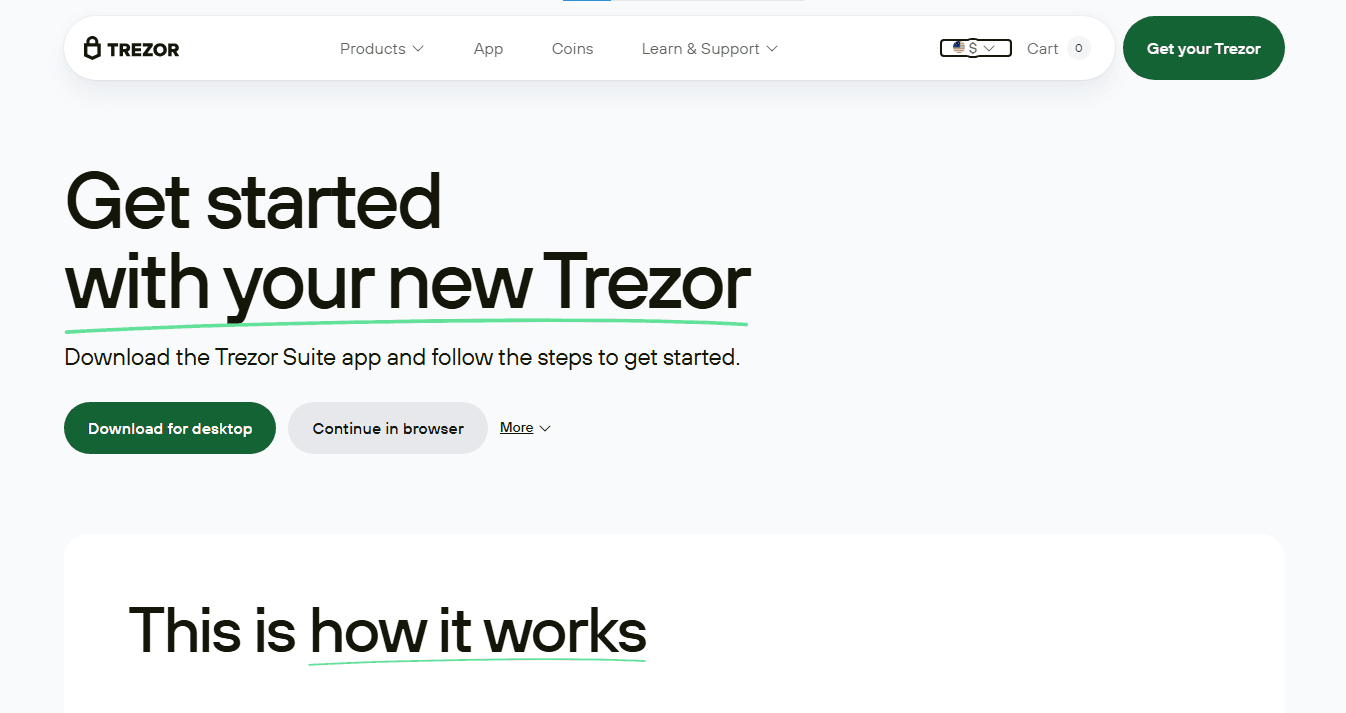
Step 2: Download Trezor Suite
Go to trezor.io/start
Choose your device model: Trezor One or Trezor Model T
Download the appropriate Trezor Suite for your operating system
Install and open the software
⚠️ Only download from official sources to avoid malware.
Step 3: Connect Your Device
Plug in the Trezor hardware wallet
The device powers on and Trezor Suite detects it
If a firmware update is needed, follow on-screen instructions
Step 4: Enter Your PIN Code
Trezor displays a scrambled PIN matrix
Enter numbers using Trezor Suite according to the matrix
PINs can be 4–16 digits long
Multiple wrong attempts increase delays; 10 failed attempts wipe the device
This protects your funds even if someone steals the device.
Step 5: Enter Optional Passphrase
Passphrases provide access to hidden wallets:
Each passphrase unlocks a separate wallet
Even if someone has your recovery seed, hidden wallets cannot be accessed without the passphrase
Example:
Passphrase “Alpha123” → Hidden Wallet A
Passphrase “Beta456” → Hidden Wallet B
Store passphrases offline and secure them carefully.
Step 6: Access Trezor Suite
After authentication, you can:
View crypto balances
Send and receive crypto
Manage multiple accounts
Update firmware
Adjust security settings
This completes the login process. Your crypto is now fully accessible.
Recovering Your Wallet Without the Device
If your Trezor is lost, damaged, or stolen:
Buy a new Trezor device
Select Recover Wallet during setup
Enter your 24-word recovery seed
Input any passphrase used
Once restored, all funds and hidden wallets are accessible. Without the recovery seed, access is impossible.
Common Trezor Login Problems
Even experienced users may face issues. Here’s how to address them.
1. Device Not Detected
Try a different USB cable or port
Restart Trezor Suite
Update your operating system and Trezor Suite
2. Forgot PIN
The device must be wiped
Restore funds with the recovery seed
3. Forgot Passphrase
Cannot be recovered
Hidden wallets are permanently inaccessible
4. Firmware Update Required
Device may block access until updated
Follow instructions carefully
Never disconnect during firmware updates
5. Incorrect Recovery Seed
Check spelling and word order
Ensure the seed matches the device being restored
Advanced Security Tips for Trezor Login
Use a strong, unique PIN
Enable passphrase hidden wallets
Store recovery seed on metal backup plates for fire and water protection
Verify receiving addresses directly on the device before sending crypto
Keep Trezor Suite and firmware up to date
Avoid connecting Trezor to public or untrusted computers
These measures strengthen security against theft and malware.
Multiple Devices and Login
Trezor supports multiple devices accessing the same wallet:
Use the same recovery seed across devices
Passphrases can create unique hidden wallets per device
Ideal for backups or family wallets
Is There an Online Trezor Login?
No. Trezor does not have online login credentials:
Private keys remain on the device
No username or password exists
Any website claiming “Trezor login” is likely a phishing attempt
Logging Out of Trezor
Logging out is automatic:
Disconnect the device from your computer
Trezor Suite locks immediately
PIN and optional passphrase are required for next access
No online credentials are involved.
Conclusion: Trezor Login is Hardware-Based Authentication
Trezor login differs from traditional online accounts:
Physical device is required
Authentication uses PIN and optional passphrase
Trezor Suite is the interface, not a web login portal
Following these best practices ensures your cryptocurrency is secure, private, and fully under your control.
Next Steps After Logging In
Once logged in:
Check balances
Send and receive crypto securely
Update firmware
Enable or manage passphrase hidden wallets
Backup recovery seed safely
Proper management guarantees safety and longevity of your Trezor wallet.